
Advice & Planning · Burlington
Mudroom Storage for Ontario Winters
Plan the winter entry around the arrival sequence: wet boots, damp outerwear, bags, changing clothes and the clear route into the home. Closed storage works best after those immediate tasks have a place.
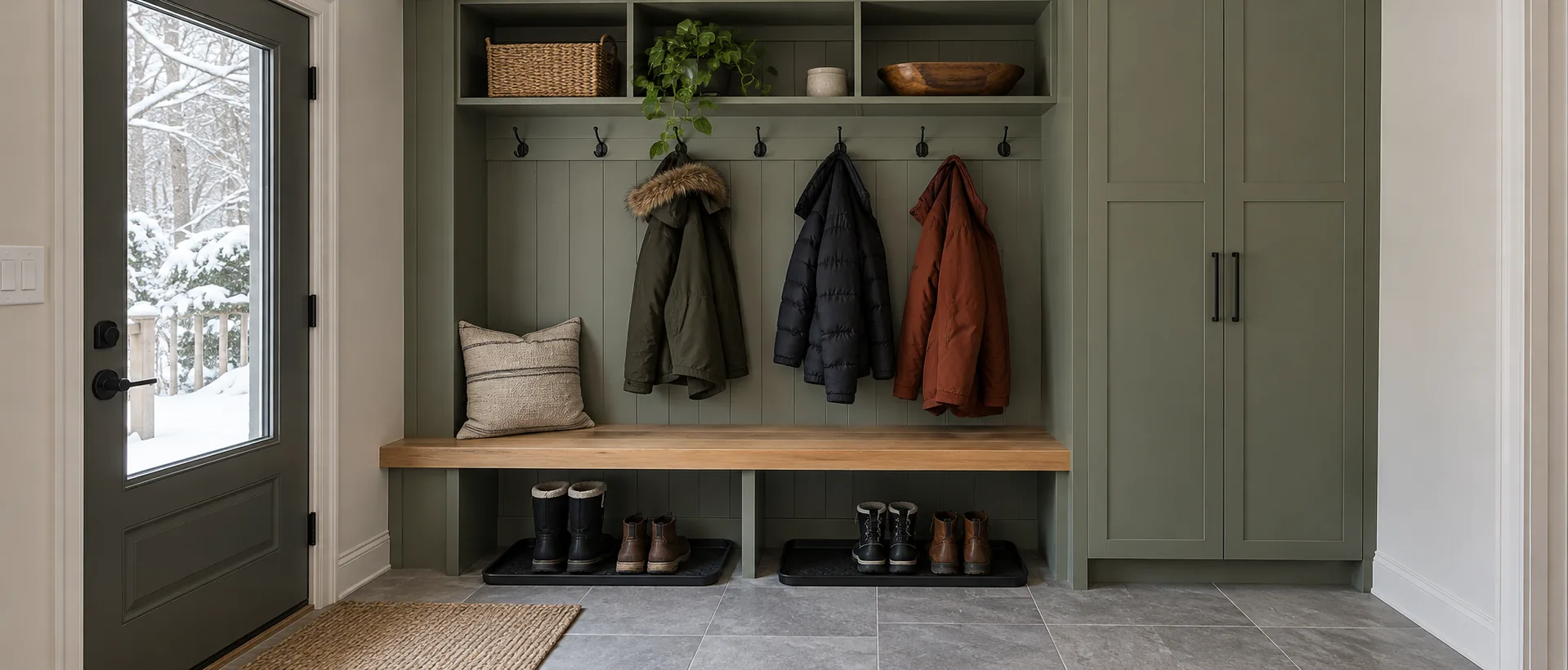
Plan the winter arrival in order
- Give wet boots and damp outerwear a temporary landing separate from dry belongings.
- Keep the door route and the seated boot-removal position clear.
- Assign reachable daily storage and move seasonal reserves out of the arrival zone.
In this guide10 sections
Map what happens in the first few minutes
Watch how the household comes through the entry on a wet or snowy day. Note where keys and bags land, where each person sits or stands to remove boots, and what happens to damp coats. The best storage plan follows that sequence. If the immediate landing spot is missing, a tall cupboard elsewhere in the room may remain unused while belongings collect beside the door. Begin with the tasks closest to arrival.
Include the person carrying groceries, a child with a backpack and someone returning with sports equipment. They may need different temporary spaces before anything is put away. Mark the route from the door into the house and keep it available through these actions. A tidy photograph of an empty mudroom does not show whether two people can arrive together or whether an open cupboard obstructs the next person entering.
Give wet boots their own temporary position
Plan a surface and removable tray for footwear that arrives with snow, salt and water. The tray should be easy to lift or wipe, with a position that does not narrow the walking route. Consider where it goes when boots are removed for cleaning. A decorative open cubby can look suitable for shoes yet be awkward for tall winter boots or for reaching the tray beneath them.
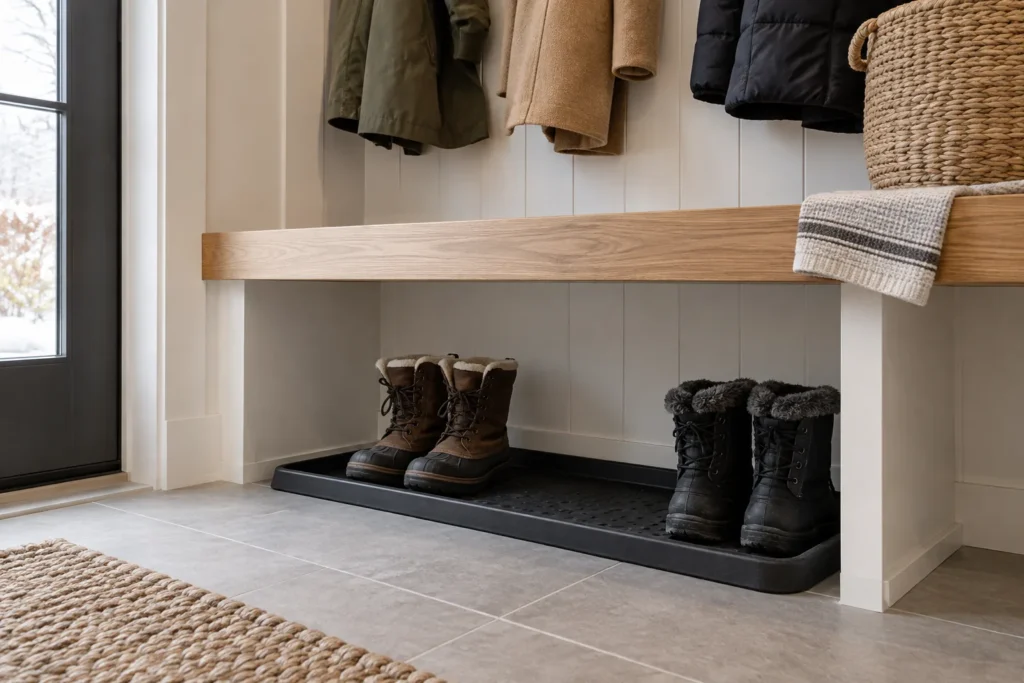
Keep wet footwear separate from stored bags, dry mittens and cabinet edges where practical. Do not assume a cabinet finish is waterproof simply because it is used near an entry. Discuss the intended exposure and product care requirements. A tray supports a routine for managing water, but it still needs regular attention. Where the existing floor or entry condition has a moisture problem, resolve that condition rather than concealing it with new storage.
Distinguish drying from putting away
A damp coat needs an appropriate temporary position before it joins dry stored clothing. Hooks in an open zone can make that sequence clear, provided coats do not overlap so densely that the outer layer hides what is underneath. Allocate enough practical hanging locations for the number and bulk of garments arriving in winter. Count the snow pants, scarves and hats as well as the coats.
Cabinetry does not replace suitable room ventilation or a household drying routine. Avoid stuffing wet clothing into a closed cupboard or expecting a narrow open cubby to solve persistent dampness. Discuss ventilation concerns separately where needed, with the appropriate qualified professional if changes are proposed. The storage design can reserve space and improve access; it should not claim special drying performance or a waterproof construction that has not been specified.
Plan the bench around the person and the door
A bench is useful when people actually have room to sit, bend and handle boots. Place it where the entry door, nearby cupboard fronts and the route indoors remain usable. Review the bench with the door in motion and a person approaching it, rather than checking only its width against an empty wall. A narrow entry may be better served by a shorter seat and clearer floor area.
Identify how the seat is supported and what storage sits beneath it. Open space can accommodate a removable tray or basket, while drawers need their own outward travel. Ask about the intended construction and use rather than assuming a load capacity from its appearance. For a broader arrangement of benches, hooks and cupboards, explore mudroom storage once the arrival sequence is clear.
Make everyday belongings easy to identify
Give each household member a practical location for the items that leave and return most often. A small basket for dry gloves, a reachable hook for a backpack and a clear spot for a hat may be more useful than a completely enclosed compartment. Decide which items belong together and which need separation. For example, a lunch bag should not share the wet boot tray simply because both arrive through the same doorway.
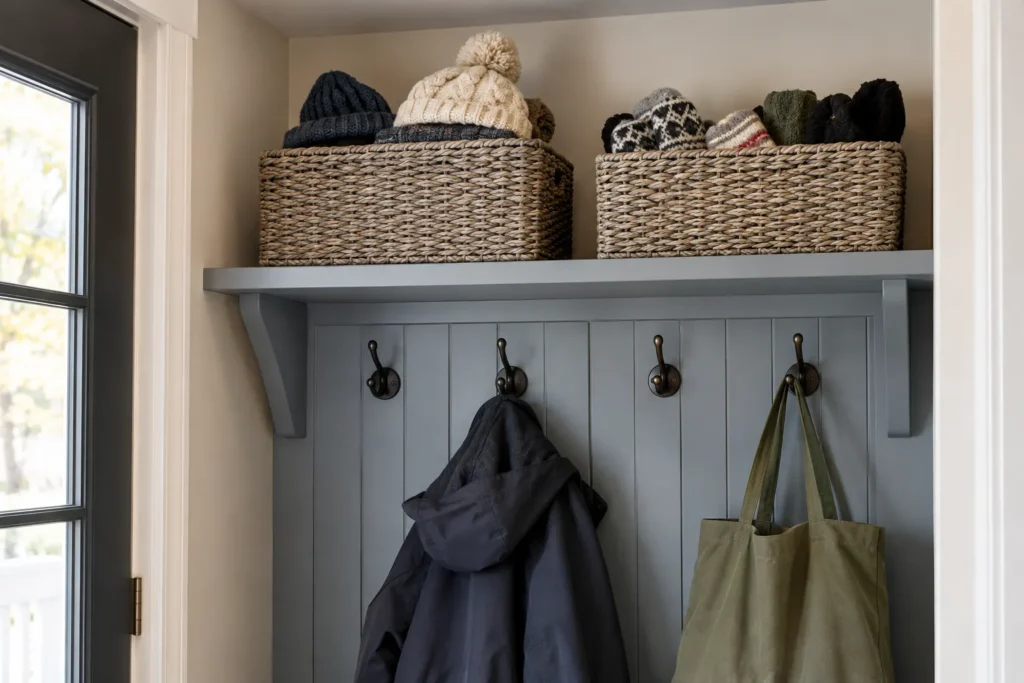
Keep the system understandable without requiring constant sorting. If a child cannot identify or reach the assigned position, the storage will depend on another person doing the work. Adjustable shelves and removable containers can accommodate changing needs more easily than fixed specialty divisions. The goal is a repeatable routine, not identical possessions in every cubby. Review the arrangement with the real winter items that will occupy it.
Treat bags and sports equipment as different shapes
A backpack, a hockey bag and a pair of skates do not use the same space. Measure bulky equipment and decide whether it belongs at the daily entry at all. Reserve accessible storage for equipment used often, and identify a separate seasonal or occasional zone for the rest. An oversized bag left on the floor can defeat an otherwise careful coat-and-boot arrangement.
Consider how equipment arrives after use and where it is prepared for its next outing. Damp or dirty gear may need attention before it enters closed storage. Keep that handling step in the routine instead of treating a large cupboard as an answer to every condition. The related article on boots, coats and sports equipment helps distinguish these categories without filling the mudroom with every seasonal possession.
Provide overflow outside the daily landing zone
Winter coats occupy more volume than lighter jackets, and the mudroom may need to hold guests’ clothing as well. Identify where occasional garments can go without covering the bench or narrowing the entry. A nearby hall cupboard can serve dry overflow while the immediate hooks remain available for arrivals. Review whether that cupboard is convenient to reach and whether its existing contents can be relocated realistically.
A garage or another utility space may suit some dry seasonal equipment, but its conditions and access should be reviewed for the particular items. Explore garage storage or hallway storage where they provide a better home than the entry. Keep sensitive belongings away from unsuitable conditions, and do not move clutter to another room without giving it a defined location.
Account for the seasonal changeover
A winter-ready mudroom does not need every season’s belongings in the easiest locations year round. Plan how gloves, lighter shoes, hats and outdoor accessories move when the weather changes. Removable baskets and adjustable shelves can make the swap straightforward. Keep the active season visible, with dry stored items grouped in an accessible overflow location. Set aside time to clean trays and inspect surfaces during the changeover.
Review what remains useful all year: a bench, a place for bags, a small-item landing spot and the clear route indoors. These should not disappear behind seasonal bins. Keep a written list of the winter and summer arrangements if that helps the household repeat the process. A simple seasonal routine can reduce the need to build permanent storage for the combined bulk of everything at once.
Choose surfaces with care and cleaning in mind
The entry receives contact from footwear, bags, zippers and damp outerwear. Explain those uses when reviewing finishes and ask for the actual care instructions. Look at exposed edges near the floor, the bench surface and the areas behind hooks. Confirm which parts of the wall or floor remain visible and who will prepare or repair them before cabinetry is fitted. A storage installation should not leave hidden assumptions about those surrounding surfaces.
Keep access for cleaning beneath and around the arrangement. A fixed lower panel that makes it difficult to retrieve a dropped mitten or wipe a tray area may complicate the routine. Discuss how removable pieces operate and where they can be set down. Do not substitute an unverified durability claim for practical protection and cleaning. Product-specific information and a sensible layout provide a clearer basis for decisions.
Prepare a winter entry brief
Describe the entry with the door closed and open, plus the adjoining route into the home. List who uses it, which items arrive each day and what needs drying before it is stored. Add rough dimensions of bulky boots and equipment. Note the existing floor, nearby ventilation openings and any access that must remain available. These details establish a useful starting point without requiring a finished design.
At a design consultation, ask to review the arrival sequence in the proposed layout: door movement, bench use, wet footwear, temporary coats and dry put-away storage. Check the busiest likely moment rather than the empty room alone. A successful winter mudroom is one the household can use comfortably when coats are bulky and everyone is trying to get indoors.