
Mudroom Storage for Boots, Coats and Sports Equipment
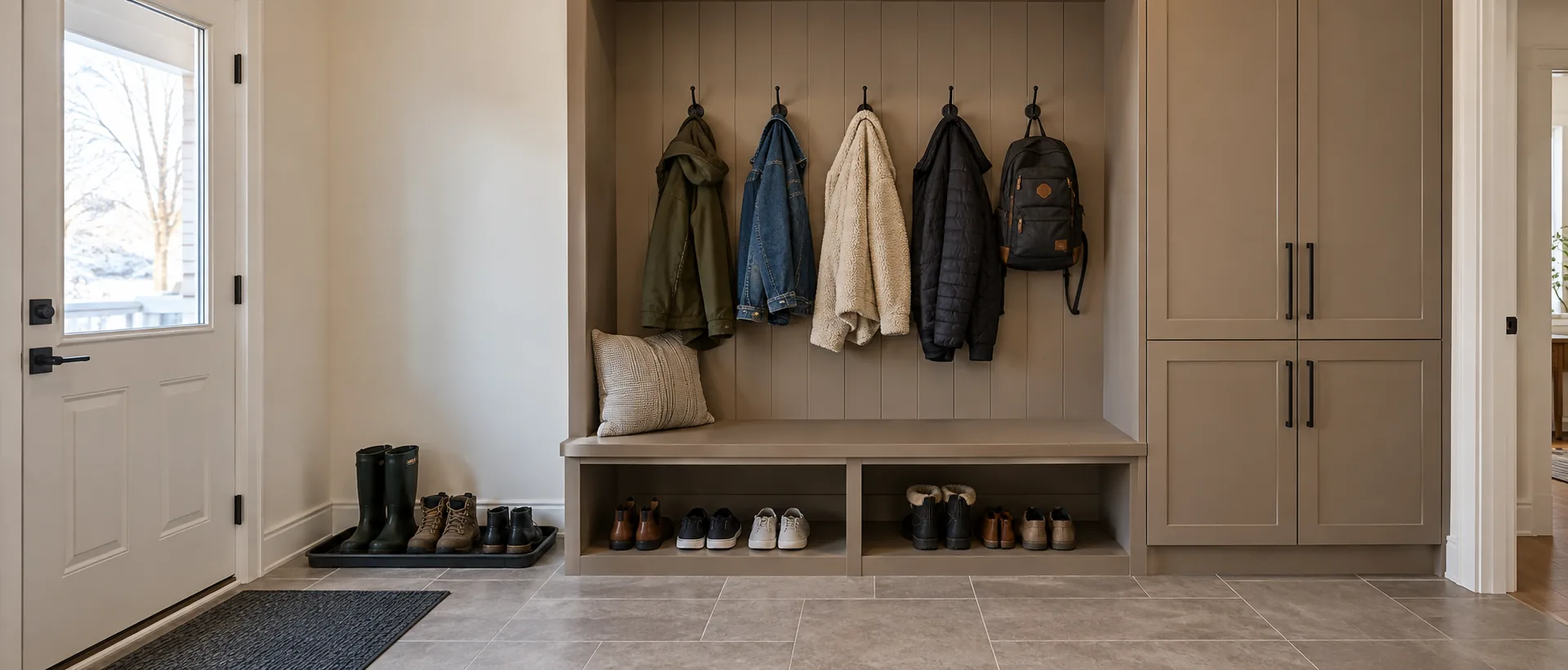
Give each arrival item a next step
- Separate wet footwear from dry shoes, bags and the bench.
- Assign coat and bag positions each person can comfortably reach.
- Test sports equipment, tomorrow’s departure and door movement together.
In this article8 sections
Start with the busiest arrival, not the tidiest photograph
The useful test for a mudroom is an ordinary rushed arrival. Someone opens the door with shopping bags, a child needs to take off boots, a coat is damp and a sports bag lands somewhere it should not. If that moment only works when everyone stands in a particular order, the layout needs another look. Good storage gives each of those belongings a practical next step without obstructing the entrance.
Write down the first few actions people take after coming inside. They may set down a bag, remove footwear, hang a coat, place keys and carry something further into the home. Different households do this in different sequences. A bench may be useful for a person who sits to change footwear; it may be less useful if it becomes the only surface available for deliveries and backpacks. Decide what the landing space is meant to support.
Use the busiest recurring day as the inventory. Include the coats and boots normally in circulation, school or work bags, and the equipment that arrives after an activity. This is a working count, rather than everything the household owns. Separate the daily load from seasonal reserves so the entry does not have to accommodate a year’s belongings at once.
Give wet footwear a destination before it reaches the bench
Footwear is often the first thing that spreads across the route into the house. Decide where someone can stand to remove boots and where those boots go next. A removable tray or another suitable wet-footwear arrangement can make the routine easier to contain and clean. Its position should work with the open door, nearby cupboard fronts and anyone using the sitting space.
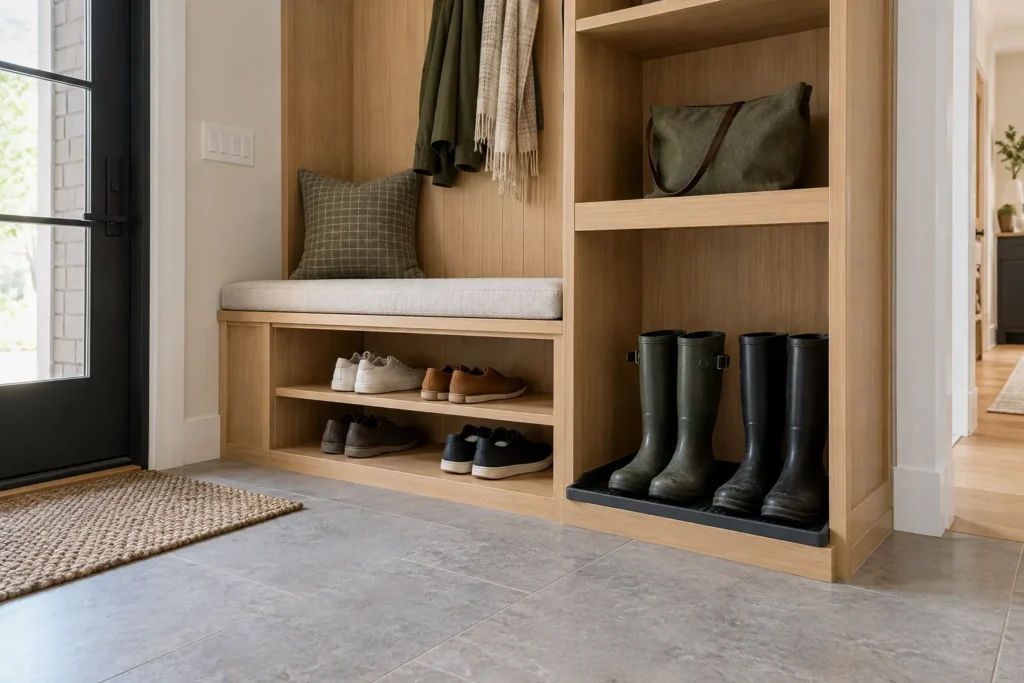
Keep a distinction between damp footwear being dealt with and dry shoes ready for use. Putting wet boots straight into a tightly packed cupboard does not make the moisture disappear. The household needs a drying and cleaning routine suited to the footwear and the room conditions. Materials around this zone should be selected with their actual care instructions in mind; no finish should be assumed to tolerate standing water indefinitely.
Count the tallest and bulkiest footwear, including pairs used only on certain days. Avoid making every opening the same height just because equal cubbies look orderly. A lower zone for small shoes and a taller section for boots may use the space more sensibly. Leave somewhere to place a pair while an area is being cleaned instead of designing a layout that only functions when every compartment is full.
Assign a place that each person can actually reach
A family entry works better when a person can put away their own belongings without asking someone else to move a bag or lift a coat. Check hook height, the weight of the item and the reach needed to place it. Young children may manage a low hook more readily than a hanger inside a tall cupboard. Adults with a limited reach may prefer an accessible lower zone too. The arrangement should reflect its users, rather than relying on a standard age-based height.
Hooks need enough surrounding space for the garments they hold. Several bulky winter coats on closely spaced hooks can cover the next hook or spill into the bench. Count coats in use, then picture them hanging at the same time. A short rail or a separate coat cupboard can be useful for some households, but it introduces a different operation and needs to remain easy to reach.
Shared storage does not have to mean identical sections. One person may carry a large work bag, while another has a small backpack and a lunch bag. Group the belongings in a way people can remember. A simple assigned bay can reduce the search for tomorrow’s bag; extra dividers are only useful if they fit what goes inside and leave adequate access.
Decide whether the bench is a seat, a landing or both
Sitting space can be valuable, particularly for changing boots, but it needs a usable approach. Check where knees and feet will go and whether a door swings through that area. The bench and its supports must be designed for their intended use. A narrow shelf is not automatically suitable as a seat simply because it is near the floor.
If bags routinely occupy the bench, give them another landing or accept that the sitting place will need to be cleared before use. Open bag compartments beside the bench may be more useful than storage directly behind the seated person. Lower drawers can provide enclosed space, but an extended drawer must leave somewhere comfortable to stand and should not block the entry route.
Look at the bench on departure as well as arrival. A person needs access to the boots, coat and bag they will take out next. If retrieving one item requires moving all the others, adjust the allocation before adding more compartments. The most useful bench is one the household can use without resetting the entire mudroom first.
Keep sports equipment close to the route it follows
Sports equipment introduces irregular shapes and a different schedule. A broad bag, a helmet, a pair of skates or a long piece of equipment will not necessarily fit a shoe cubby. List the equipment that needs a regular entry location and measure the largest pieces. Discuss appropriate support and the actual contents of any proposed shelf or accessory, rather than assuming a particular capacity.
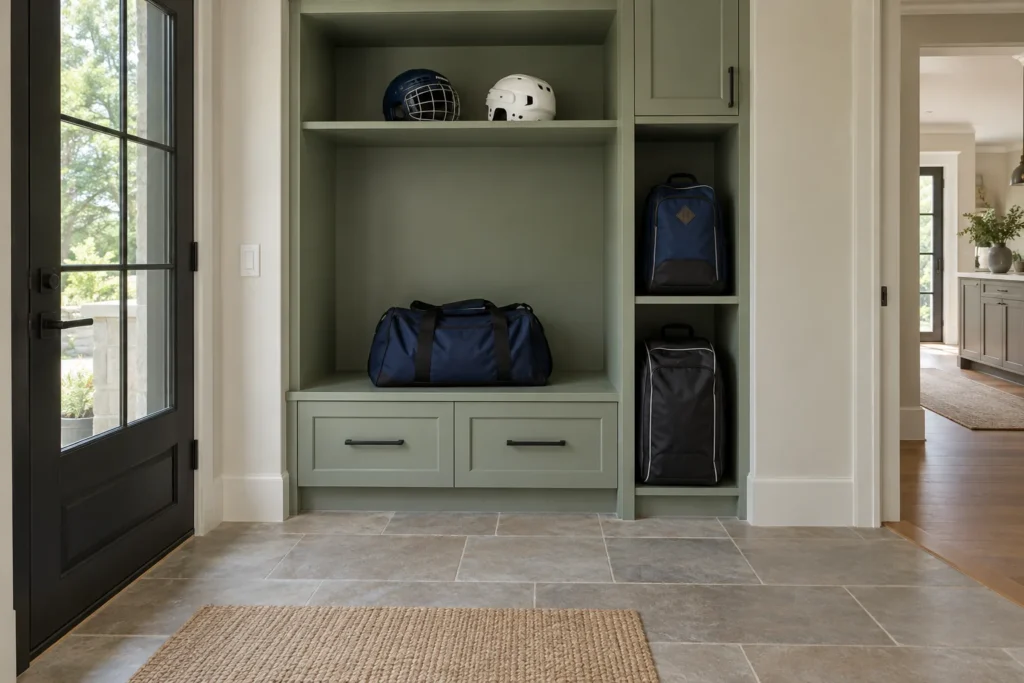
Some items belong near the entrance because they leave several times each week. Other items may be better stored in a suitable garage zone or another room when they are dry and ready to put away. The decision depends on the household’s route, the item’s condition and the available space. Garage storage planning can consider bulky equipment alongside vehicle access and fixed utilities; the mudroom does not have to carry the whole load.
Do not seal damp equipment away simply to make the room look quieter. Follow the equipment’s care instructions and establish where drying or cleaning happens before it reaches enclosed storage. A bag landing can hold the items ready for the next activity, while a separate location handles items that are not yet ready. This distinction is more useful than adding a cupboard that quickly fills with a mixture of both.
Make tomorrow’s departure easy to prepare
A mudroom should help people leave as well as arrive. Think about the morning search for a missing lunch bag, gloves or car keys. Give these smaller items a place near the belongings they travel with. A small accessible shelf or divided drawer may work, provided it does not become a general household catch-all. Identify the few things that genuinely need this location.
Preparing the next day’s bag should not remove the room’s sitting or walking space. Consider a temporary landing that can be cleared after packing. If different activity bags rotate during the week, decide where the ready bag goes and where the other one waits. The answer may be one working compartment and one reserve location, rather than a permanent cubby for every activity.
Avoid making the system depend on elaborate labels, matching containers or constant tidying. The destinations should remain understandable when someone comes home late or a visitor helps a child get ready. Simple visible zones can be useful; enclosed storage can be useful too, when opening it is an easy part of the routine. Choose the balance around behaviour, rather than an expectation of perfect habits.
Move seasonal reserves out of the daily landing
The busiest winter week deserves consideration, but not every winter item needs to remain by the door all year. Separate the coats and footwear in current use from occasional or out-of-season pieces. Identify the reserve location before shrinking the daily mudroom allocation. Otherwise the overflow will return to the same bench and floor after installation.
A high cupboard can hold suitable light reserves, while another closet or a planned household storage zone may suit bulkier items. Consider who will retrieve them and how often. Items that are awkward or heavy to handle should not be placed where they require an unsafe reach. Whole-home storage planning helps connect these locations instead of treating the entry as an isolated project.
The Ontario winter mudroom planning guide explores the wet-weather and seasonal conditions in more depth. Use that broader check alongside this daily routine: the mudroom needs both an appropriate place for wet arrivals and a manageable amount of dry storage. A single extra cupboard cannot replace a workable route between the two.
Test the plan with belongings and doors in use
Before settling on a layout, show the exterior door, nearby room doors, switches, vents and any existing obstacles. Open the doors while someone stands where they would remove boots or reach a bag. Consider a second person passing through. Storage fronts and drawers need to work in this situation, not only when the room is empty and every door is shut.
Record how the current entry works on a normal busy day as well as after it has been tidied. The busy routine reveals the working load; the cleared entry makes the walls, trim and openings easier to check. Add a short list of the largest belongings and explain which items need to remain nearby. These details give a mudroom storage discussion a practical starting point.
For a design consultation, describe the action that is hardest today: sitting to change footwear, finding tomorrow’s bag, hanging several coats or moving through the door. The goal is a clear arrangement for those real tasks. Agree what will be stored here, what will move elsewhere and how the wet-to-dry routine will work before choosing the final fronts and finish.