
Finishes & Materials · Burlington
Finishes that belong to the room and suit the storage
Choose custom storage finishes in Burlington by considering colour, grain, sheen and the surfaces you touch every day. Review visible edges, cabinet interiors and care alongside the room’s existing finishes.

Choose a finish in the room it will belong to
A storage finish is seen alongside flooring, walls, furniture and trim. Begin with those existing surfaces rather than treating the cabinetry as an isolated colour choice. A large wardrobe wall has a different visual presence from a small shelf run, so judge both the tone and the amount of material in the proposed room.
Look at the room in ordinary daylight and its evening lighting. The same surface can read warmer, cooler or darker as the light changes. A small sample helps with comparison, but it does not show the effect of a full elevation. Relate the selection to cabinet proportions, exposed ends and the areas that will remain open.
A coordinated room does not require every wood tone to match exactly. Consider whether the cabinetry should blend with existing furniture or create a deliberate contrast. Keep the number of competing finishes manageable, especially in a compact room. The broader closet-design plan should settle the layout before decorative choices take over.
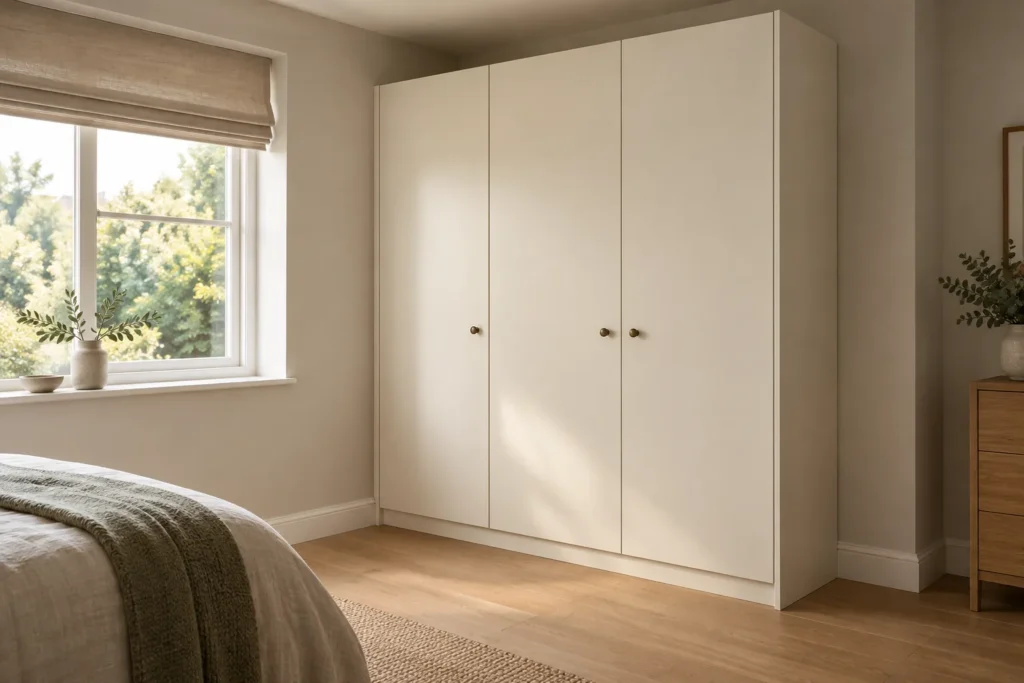
Separate material construction from visible appearance
A description such as light oak or warm white tells only part of the story. The visible surface, underlying panel construction and edge treatment are separate specification decisions. Ask what is proposed for cabinet sides, shelves, doors and drawer boxes rather than assuming every component uses the same construction.
Wood, veneered surfaces, decorative panels and coated finishes can create different appearances and maintenance needs. Suitability depends on the actual product, how it is used and how the assembly is detailed. Do not rely on a broad material label to establish durability, moisture resistance or a particular environmental certification.
A useful proposal identifies the material and finish where it matters, including interiors and exposed ends. If different constructions are used in different parts, that should be understandable from the scope. Request the relevant product information for the selected material instead of comparing two designs by colour names alone.
Review grain direction and edge treatment
Grain changes the rhythm of an elevation. Vertical grain on a tall door and horizontal grain on a wide drawer can create a different effect from a continuous direction across the whole run. Decide whether matching grain between adjacent fronts is important, and discuss what can realistically be achieved with the chosen material.
Natural-looking surfaces may contain variation rather than repeating identically. Compare the expected variation with the existing floor and furniture. A finish that looks calm on one small piece may become visually active across a large wall. It helps to review more than a tiny sample when the grain is a prominent part of the design.
Edges are visible where shelves, door fronts and end panels meet. Ask how the front edge is finished and how corners are treated. A consistent edge can make straightforward cabinetry feel considered, while a poorly resolved junction can draw attention even when the main surface is attractive. Judge the edge detail alongside doors and front styles, not as an afterthought.
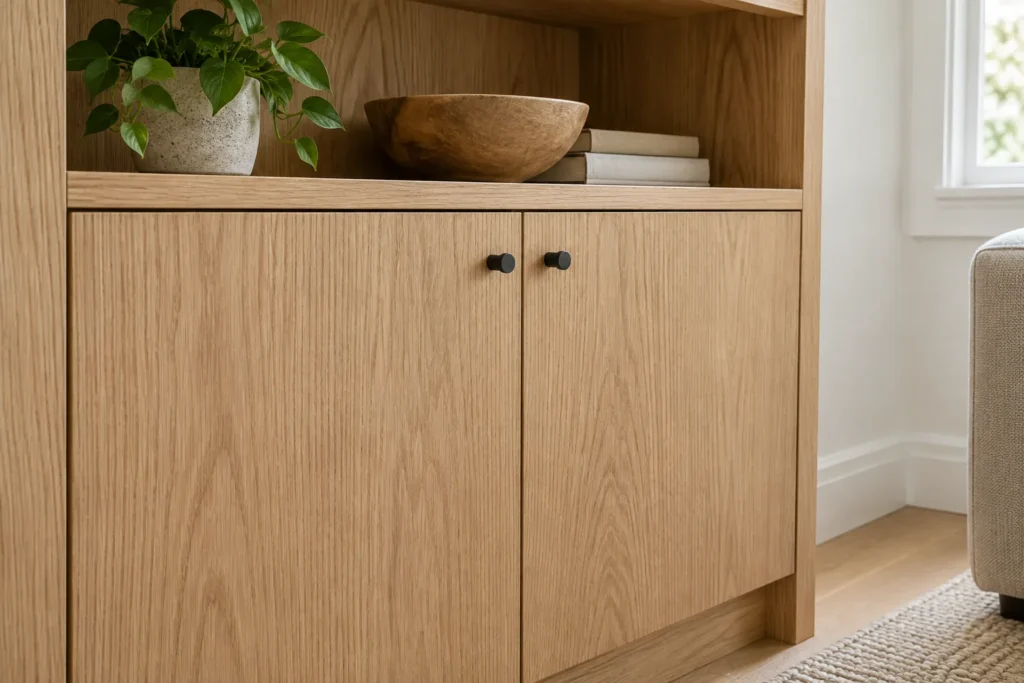
Balance colour and sheen with practical use
Sheen affects how light reflects from a cabinet face. A quieter surface may reduce the visual emphasis of a long run, while a more reflective appearance can suit a different room. Neither is automatically the better choice. Consider glare, the surrounding finishes and how much of the cabinetry is visible from the doorway or seating area.
Darker fronts can make dust or fingerprints more noticeable in some conditions, while very pale surfaces can reveal marks of a different kind. These are reasons to look at the actual sample and care instructions rather than to make universal claims. Handles, opening hardware and the location of frequently touched areas also affect everyday cleaning.
For shared family storage, discuss where wet outerwear, cleaning supplies or heavily handled objects will sit. A decorative finish should not be assumed suitable for every exposure. The selected product and detailing need to match the intended use, with any limits understood before the cabinet is specified.
Give the inside the same attention as the outside
The cabinet interior is seen whenever a door or drawer opens. A light interior can make small contents easier to find, while a wood appearance can add warmth. The choice should support the stored items as well as the exterior palette. Ask whether shelves, drawer interiors and the back are part of the same specification.
Review exposed ends and recesses carefully. A wardrobe beside a doorway may show an entire side panel, while a fitted alcove may show only the fronts. An open shelf needs its top, underside and edge considered. Describing only the door finish leaves important visible surfaces unresolved.
For built-in wardrobes, the relationship between outer fronts and internal compartments is particularly noticeable. For made-to-measure built-ins, room-specific ends and fitted transitions may matter just as much. Identify these surfaces on the design before comparing finish options.
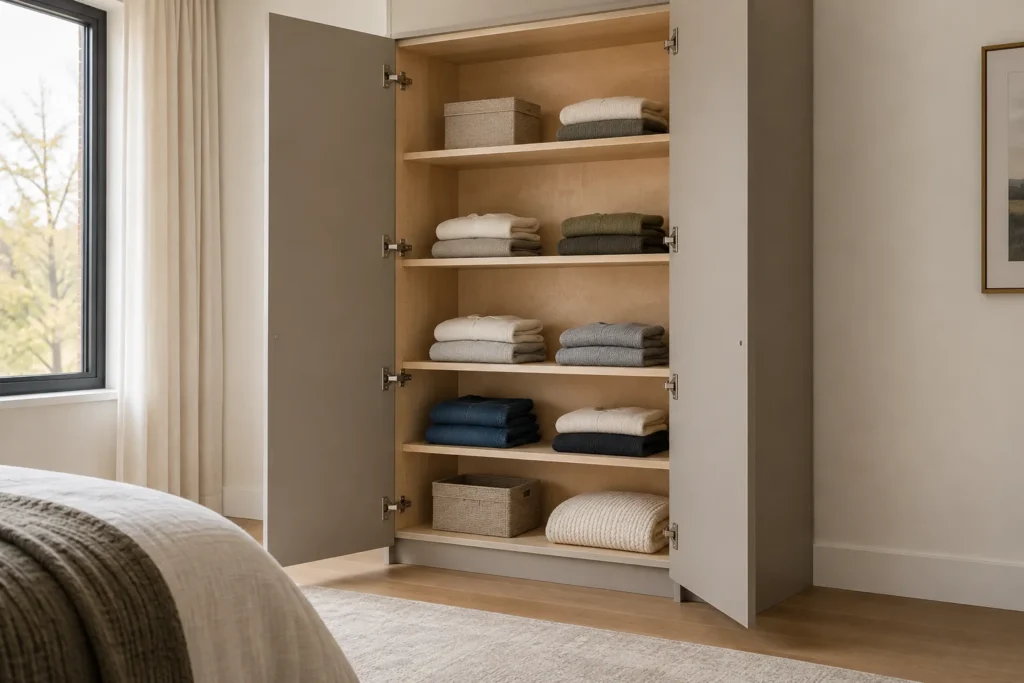
Confirm care and the complete finish scope
Ask how the selected surface should be cleaned
Care should follow the guidance for the actual material and finish. Ask which cleaning products and methods are appropriate, and what to avoid. Do not assume a product suited to a countertop or floor is suitable for cabinet fronts. Abrasive pads, excess liquid or an unsuitable cleaner can affect some surfaces.
Detailed checks
Wipe up spills promptly and avoid leaving damp items against cabinetry unless the specified arrangement is intended for them. Entry storage and laundry areas have different conditions from bedroom clothing storage. Product suitability, ventilation and detailing should be discussed for that particular room rather than covered by a blanket performance promise.
Ask what routine checks are useful for hardware and fitted components, and how a damaged surface or front could be addressed. Repair and replacement options depend on the actual finish and construction. Clear care information is more helpful than an unsupported claim that a material is maintenance-free.
Compare the complete material and finish scope
Two cabinets described with the same colour can use different surface products, interiors, edges and construction. A fair comparison should identify those differences along with shelf support, hardware and the fitted details. The finished appearance and the practical specification belong in the same discussion.
Detailed checks
Confirm what is included for visible cabinet ends, filler pieces, plinths and top infill. If a sample has been selected, record the agreed reference with the proposal so there is a clear basis for review. Ask how expected variation will be handled and whether particular grain matching or decorative detailing changes the scope.
Bring notes about the room and the existing finishes to a design consultation. Start with the storage needs and layout, then review appearance, care and specification together. This sequence helps avoid choosing a beautiful front for a cabinet arrangement that does not fit the room or its everyday contents.
Questions about planning your space
Should every cabinet surface use the same material?
Not necessarily. Fronts, interiors, shelves and drawer boxes may use different specified constructions. Ask what is proposed in each location and why, so the visible appearance and practical scope are clear.
How can I compare a colour with my room?
Review an actual sample beside the floor, wall and furniture in ordinary daylight and evening light. Consider the scale of the cabinet run and the sheen. A small sample is a starting point rather than a full-room prediction.
Does a wood appearance mean the cabinet is solid wood?
No. Appearance alone does not identify construction. Ask for the actual surface and panel specification, including edge treatment and exposed ends, instead of relying on a colour or grain description.
Are darker finishes harder to maintain?
Visibility of dust, marks and fingerprints depends on the selected surface, sheen, light and use. Review the actual sample and care guidance. Avoid treating every dark finish or every pale finish as having identical maintenance needs.
Can grain be matched across doors and drawers?
The possibilities depend on the material, panel layout and fabrication. Explain how important alignment is and confirm the agreed detail in the scope. Natural variation and matching requirements should be discussed before final selection.
What information should be in the finish specification?
Include the selected surface, relevant construction, interior finish, exposed ends and edge treatment. Identify care guidance and any agreed sample reference. This makes comparison clearer than a colour name on its own.
Connect the finish to the storage plan
Share the room, the surfaces you are keeping and the storage layout you have in mind. Say whether you prefer a quiet painted appearance, visible grain or a combination. A useful finish discussion includes the outside, the inside and the fitted edges, along with how the storage will be used.